English
 Hindi (हिंदी)
 Gujarati (ગુજરાતી)
 Telugu (తెలుగు)
 Marathi (मराठी)
 Bengali (বাঙ্গালী)
 Turkish
 Dutch
 Italiano
 Russian
 Romaian
 Portuguese (Brazil)
 Greek
 Arabic
 French
 Deutsch
 Spanish
 Portuguese

RevOps Platforms Market in APAC: Opportunities Across India, Japan, Singapore & Australia
Cyber Security |
2026-09-01 18:47:15
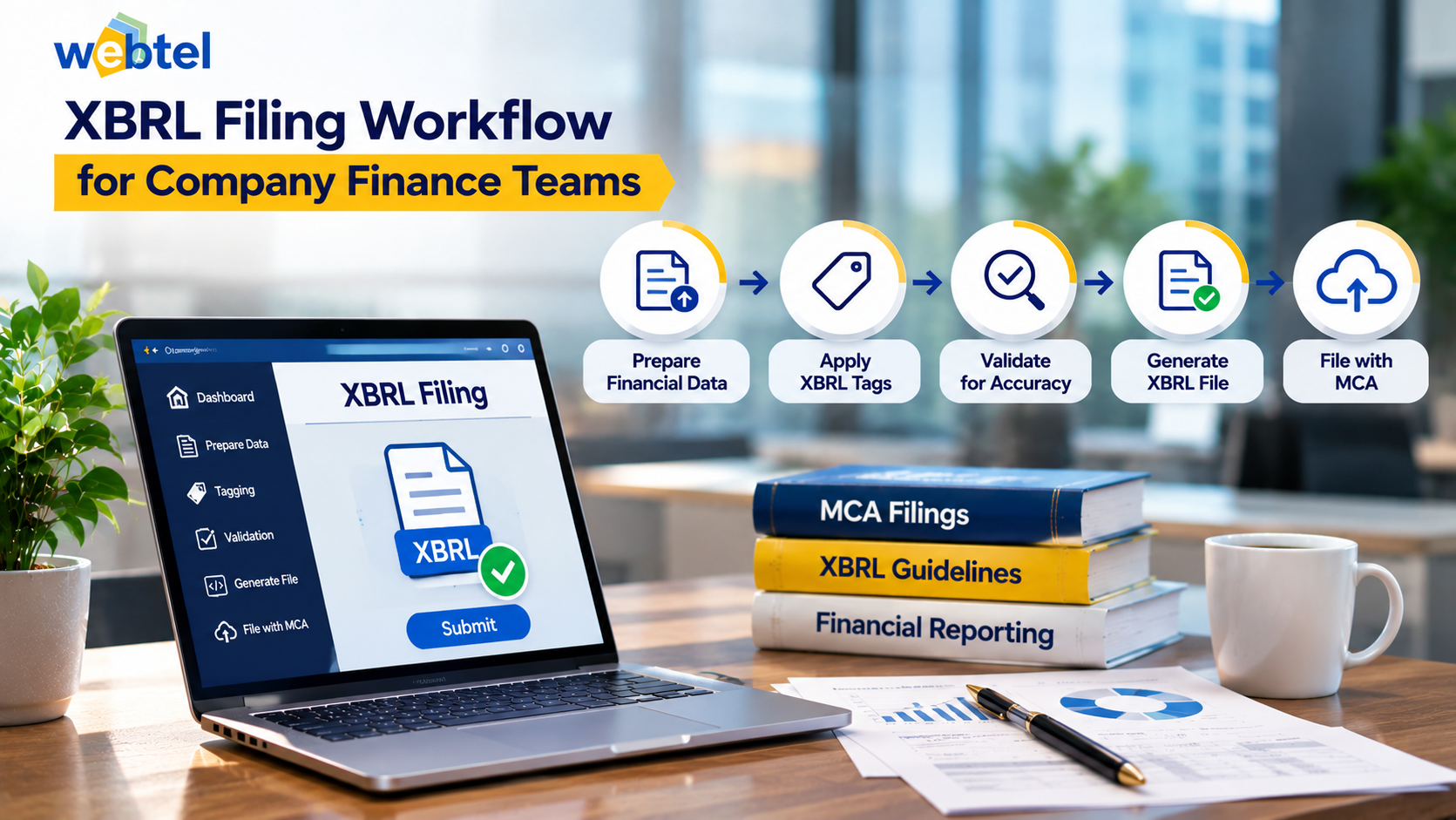
Preparing an XBRL filing involves more than entering financial figures into a reporting system. Finance teams need to organise source documents, identify the correct taxonomy elements, complete tagging and check the generated report before submission. When these activities are handled without a defined process, teams may face repeated corrections, unclear responsibilities and delays.
A planned XBRL filing workflow helps companies organise these activities from the initial collection of financial information to the final review. It also gives finance teams a clearer view of which tasks need internal attention and where technical support may be required.
The quality of an XBRL filing depends heavily on the information provided at the beginning. If financial statements are incomplete or different departments are working with separate versions, the preparation process can become unnecessarily complicated.
Before starting the filing, finance teams should organise the required documents. These may include:
Approved financial statements.
Notes to accounts and supporting disclosures.
Relevant schedules and working papers.
Current-year and comparative financial information.
Other documents required for the specific filing.
The team should also check whether the figures in the supporting schedules agree with the financial statements. Any differences should be investigated before the information is used for tagging.
Document version control is equally important. If a revised financial statement is issued after XBRL preparation has started, the team needs to identify which figures or disclosures must be updated.
Once the source documents are organised, the next stage is taxonomy mapping. This involves identifying the taxonomy elements that appropriately represent the information reported in the financial statements.
A similar account name does not automatically mean that a taxonomy element is suitable. Finance teams need to consider the actual meaning of the disclosure, its reporting context and the available taxonomy definitions.
For example, two companies may use different descriptions for a similar expense. The mapping decision should be based on the nature of the reported information rather than the wording used in the company's internal accounting records.
Unclear disclosures should be flagged for review instead of being assigned to an element simply to complete the tagging process. This is particularly important when the financial statements contain company-specific information or disclosures that require careful interpretation.
After mapping decisions are established, the team can proceed with tagging and data preparation. This stage converts the relevant financial information into the structured format required for XBRL reporting.
A typical workflow may include the following activities:
1. Enter financial values
The relevant figures are entered against the selected taxonomy elements. The team should check the reporting period, units and signs of the values to avoid inconsistencies.
2. Add disclosure information
Text-based disclosures and notes may also need to be represented in the XBRL report. Their treatment depends on the applicable taxonomy and filing requirements.
3. Review comparative figures
Where comparative information is required, current-year and previous-year figures should be checked against the approved financial statements.
4. Check tagging decisions
The team should review whether each reported item has been connected to an appropriate taxonomy element. Unusual classifications and unclear disclosures should receive additional attention.
Using suitable XBRL filing software can support activities such as data preparation, taxonomy tagging and report generation, depending on the software's available features. However, the team still needs to review the meaning and accuracy of the information being reported.
Completing data entry does not mean the filing is ready. Validation is a separate stage that helps identify technical inconsistencies and reporting issues before submission.
Finance teams should review validation messages carefully rather than treating every warning as a routine system issue. Some errors may relate to missing information, incorrect values or inconsistencies between related disclosures.
A practical validation review should cover:
Whether required information has been included.
Whether figures and reporting periods are consistent.
Whether relevant calculations and relationships have been checked.
Whether text disclosures have been handled appropriately.
Whether validation errors have been investigated and resolved.
Whether the generated instance document reflects the approved source information.
The team should also maintain a record of corrections. This makes it easier to understand why a value or tagging decision was changed and helps reviewers follow the preparation process.
XBRL preparation often involves information from more than one department. Finance teams may provide approved statements, accounts personnel may supply supporting schedules, and compliance personnel may coordinate filing requirements.
Without clear ownership, important tasks can remain incomplete because each department assumes another person is responsible.
A responsibility structure can help prevent this problem:
| Workflow activity | Suggested responsibility |
|---|---|
| Preparing financial statements | Finance and accounts team |
| Providing supporting schedules | Relevant department |
| Organising source documents | Assigned finance coordinator |
| Taxonomy mapping and tagging | Trained internal team or external specialist |
| Reviewing validation results | Preparation and review team |
| Checking financial accuracy | Internal finance team |
| Final approval | Authorised company personnel |
The exact arrangement will vary between companies. Smaller teams may assign several activities to one person, while larger organisations may divide preparation and review across different employees.
The important point is to identify who performs each task, who checks the work and who approves the final information.
A filing deadline should not be the first point at which the team checks whether the XBRL report is complete. Companies benefit from setting internal milestones for document collection, tagging, validation and final approval.
For example, a finance team can set an internal document submission date before the preparation stage begins. It can then reserve time for resolving queries, reviewing the generated report and obtaining approval.
This approach also gives the team room to handle unexpected corrections. If a disclosure changes or a supporting schedule is revised, the impact can be assessed before the final submission stage.
Companies with limited in-house expertise may also evaluate external preparation support. Before engaging a provider, they should define the activities to be handled externally and retain appropriate internal oversight of financial information and final approval.
A consistent XBRL filing workflow helps finance teams manage documents, tagging decisions, validation and review without treating every filing as a completely new task.
Companies should document their preparation steps, maintain organised source records and assign responsibility for each stage. They should also review recurring issues after each filing so that the same problems do not continue into the next reporting cycle.
With a clear process and suitable technical support, finance teams can manage XBRL preparation more systematically while keeping control over the accuracy of the information submitted.