English
 Hindi (हिंदी)
 Gujarati (ગુજરાતી)
 Telugu (తెలుగు)
 Marathi (मराठी)
 Bengali (বাঙ্গালী)
 Turkish
 Dutch
 Italiano
 Russian
 Romaian
 Portuguese (Brazil)
 Greek
 Arabic
 French
 Deutsch
 Spanish
 Portuguese

Respiratory Care Devices Market: Insights, Key Players, and Growth Analysis
Other |
2026-07-01 03:35:50
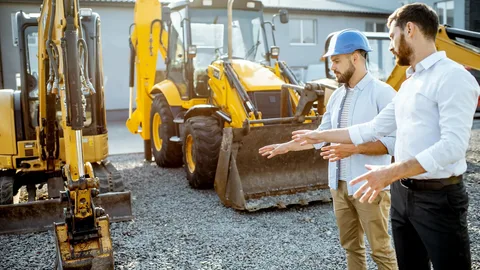
Every construction project has different requirements. Some jobs involve deep excavation while others focus on grading, road work, material handling, or difficult rock conditions. Choosing the right Heavy Construction Equipment service in Truckee, CA can help contractors select machines that match the work and improve overall jobsite efficiency. Proper equipment planning can also help reduce delays, control operating costs, and make demanding projects easier to manage.
Selecting construction equipment should begin with a clear understanding of the project. Contractors should know what type of work needs to be completed, how much material must be moved, what type of ground is present, and how much space is available for equipment.
A machine that is ideal for one job may not be suitable for another. For example, an excavator can be a strong choice for digging and trenching, while a loader may be better for moving loose materials. Specialized rock equipment may be necessary when crews encounter hard or fractured ground.
Understanding these differences before starting a project can help contractors make better equipment decisions.
Project size is one of the first factors contractors should consider. Small projects often require compact machines that can operate in restricted spaces. Larger projects may require heavy excavators, loaders, drilling equipment, crushers, and other high-capacity machines.
Using equipment that is too small can increase the time required to complete a task. Operators may need more passes to move material or complete excavation. On the other hand, equipment that is unnecessarily large can increase fuel use and operating costs.
The goal should be to find a machine with enough capacity for the workload while still being practical for the jobsite.
Truckee projects can involve different terrain conditions. Contractors may encounter slopes, uneven ground, rocky areas, loose soil, or restricted access points. These conditions can influence which equipment is most appropriate.
Track-based machines can provide useful stability on many types of uneven terrain. Excavators with suitable digging power can handle demanding excavation work, while loaders can help move and organize materials around the site.
Before equipment is selected, contractors should evaluate the site carefully. Knowing the terrain can help prevent equipment from being placed in conditions that exceed its capabilities.
Excavators are versatile machines that can perform many construction tasks. They can be used for foundation excavation, trenching, drainage work, utility installation, site preparation, and earthmoving.
Different excavator sizes are available for different applications. Smaller excavators can be useful in confined areas, while larger models can provide additional digging power and capacity.
Attachments can also expand the usefulness of an excavator. Buckets are suitable for common digging and material handling, while hydraulic breakers can be useful for rock and concrete work.
Choosing the correct excavator size and attachment can make excavation work more productive.
Construction sites often require large amounts of soil, gravel, debris, and other materials to be moved. Wheel loaders and track loaders can help crews handle these tasks efficiently.
Wheel loaders can be useful when working on open and relatively firm surfaces. Track loaders can provide greater versatility on some uneven or softer ground conditions.
Loaders can also be used to feed material into processing equipment, organize stockpiles, and move materials between different areas of a jobsite.
Not every construction project has plenty of room for large machines. Residential developments, renovation projects, utility work, and smaller commercial sites may have limited access.
Compact track loaders and skid steers can be useful in these situations. Their smaller size allows them to maneuver through areas where larger equipment may have difficulty operating.
Despite their compact dimensions, these machines can perform a variety of tasks when equipped with suitable attachments.
Rock can make construction work more complicated. Excavation through hard material may take longer when standard digging methods are not enough.
Rock drills, hydraulic breakers, and crushing equipment can provide specialized solutions. Drilling equipment can help create holes in hard material, while breakers can reduce large rocks into manageable pieces.
Rock crushers can process suitable material into smaller sizes. This may help contractors manage excavated rock and reduce the amount of material that must be transported away from the site.
Specialized equipment should always be selected according to the type and scale of the rock work.
Attachments are an important part of equipment selection. A machine with the correct attachment can perform tasks beyond its basic function.
For example, an excavator can use a breaker for demolition or rock work. A skid steer can use different attachments for grading, digging, sweeping, or material handling.
Contractors should consider which tasks the machine will perform throughout the project. Selecting a machine that accepts multiple compatible attachments can provide greater flexibility.
This approach can also reduce the need to bring several specialized machines onto the same site.
Large construction equipment must be transported safely to and from the jobsite. Transportation requirements should be considered before selecting equipment.
Contractors need to know the machine's size, weight, access requirements, and transportation needs. A machine that performs well but is difficult to move to a restricted site may create unnecessary logistical challenges.
Planning transportation in advance can help prevent delays at the beginning of a project.
Contractors often need to decide whether to rent or purchase equipment. There is no single answer that works for every business.
Purchasing may make sense when a machine will be used regularly across many projects. Rental can be more practical when equipment is required for a short-term project or specialized task.
Rental also gives contractors the opportunity to access equipment without taking on long-term ownership responsibilities.
Before making a decision, contractors should consider utilization, maintenance, transportation, storage, project duration, and expected operating costs.
Equipment selection does not end when the machine reaches the jobsite. Proper maintenance is important throughout the project.
Operators should perform routine inspections and check important components before equipment is used. Hydraulic systems, tracks, tires, fluids, attachments, and other components should be monitored according to manufacturer recommendations.
Small problems can become larger issues if they are ignored. Preventive maintenance can help contractors reduce unexpected downtime and keep equipment available when it is needed.
Reliable support from an experienced equipment provider can also make equipment planning easier. Ranchie's Rigs offers equipment solutions for contractors working on different types of construction projects.
Even the best machine cannot perform efficiently if it is not operated correctly. Equipment operators should understand the controls, capabilities, limitations, and safety requirements of the machines they use.
Experienced operators can often make better decisions about machine positioning, attachment use, material handling, and work patterns. Proper operation can also help reduce unnecessary wear and fuel consumption.
Training should be treated as an important part of equipment planning rather than an afterthought.
Some contractors may assume that a larger machine will always complete work faster. This is not necessarily true.
A large machine may provide more power, but it can also require more space, fuel, transportation planning, and operating resources. A smaller machine may be more efficient when the project involves tight access or lighter workloads.
The best equipment is the machine that matches the actual job. Contractors should focus on productivity, maneuverability, capacity, operating costs, and site conditions instead of simply choosing the largest available machine.
Construction projects often change as work progresses. The equipment needed during site preparation may be different from what is required during later stages.
For example, excavation equipment may be most important during early site development. Loaders and compact equipment may become more important during material handling and finishing work. Specialized drilling or crushing equipment may be needed only during specific phases.
Creating an equipment plan for each project stage can help contractors avoid unnecessary equipment costs.
Local conditions should always be considered when planning a construction project. Truckee can present challenging terrain and seasonal conditions that may influence how equipment is selected and operated.
Contractors should consider ground stability, access routes, slopes, weather, and working conditions. Equipment should be suitable for the environment and the tasks it will perform.
A provider familiar with construction equipment needs in the area can help contractors think through these factors before work begins.
What should I consider when selecting construction equipment?
Consider the project type, workload, ground conditions, available space, equipment capacity, attachments, transportation needs, and project duration. These factors can help you select equipment that fits the actual job.
Which machines are commonly used for excavation?
Excavators are commonly used for digging, trenching, foundation work, drainage projects, and earthmoving. The appropriate size depends on the depth, material, access, and overall scope of the project.
Are compact machines useful on Truckee construction sites?
Yes. Compact track loaders and skid steers can be useful when projects have restricted access or limited working space. Their attachment options also make them suitable for multiple tasks.
When should contractors consider renting equipment?
Rental can be a practical choice when equipment is needed for a short-term project, seasonal work, or a specialized task. It can provide access to equipment without requiring long-term ownership.
How can equipment planning reduce construction delays?
Planning helps contractors identify the machines and attachments required before work begins. It can also help with transportation, scheduling, maintenance, and equipment availability, reducing the chance of avoidable delays.
Selecting construction equipment is an important part of preparing for any project. Contractors need to look beyond basic machine size and consider how equipment will perform in actual working conditions.
The right Heavy Construction Equipment service in Truckee, CA can support excavation, grading, material handling, rock work, and site preparation while helping crews work more efficiently.
Equipment should be selected according to the project workload, terrain, access, attachments, transportation needs, and expected operating period. Proper planning can help contractors avoid equipment mismatches and unnecessary costs.
Maintenance and operator experience are also important. Reliable machines require proper care, while trained operators can help equipment perform efficiently and safely.
For contractors who need dependable equipment solutions, Ranchie's Rigs can be a useful option when planning construction and earthmoving work. A practical equipment strategy can help crews stay organized and keep projects moving.
Whether a project involves a small development or a larger construction operation, taking time to choose the right machines can lead to better productivity and fewer interruptions. Good equipment planning is not simply about finding a machine. It is about finding the right machine for the right job.